Howdy Dingbats: A Creative Font for Branding
It was a quiet afternoon when I opened my design board, ready to tackle a new branding project. The client wanted something playful yet professional, and I knew I needed a font that could bring that balance to life. That’s when I stumbled on Howdy Dingbats.
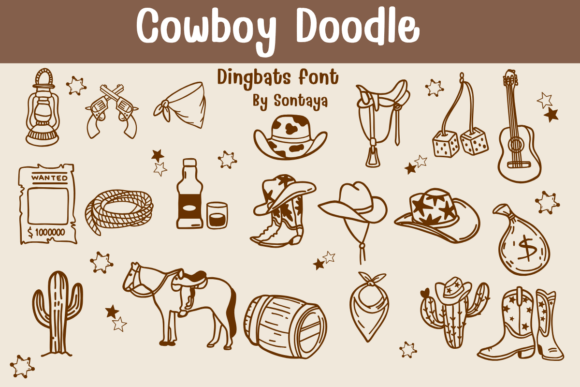
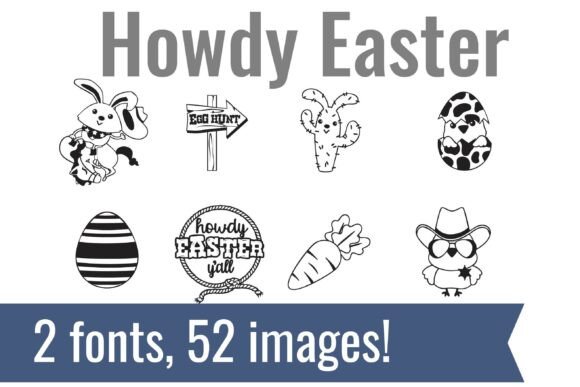
Howdy Dingbats is a duo of dingbat fonts that feature charming cowboy and Easter-themed illustrations. Each font has its own personality—cowboy imagery gives a rustic, adventurous vibe, while the Easter designs add a touch of whimsy and celebration. These aren’t just fonts; they’re visual storytelling tools that can elevate any design project with their unique flair.
The first time I used Howdy Dingbats was on a logo draft for a small café. The owner wanted something that felt warm and inviting, but also had a bit of character. I experimented with the cowboy font on a simple text-based logo, adding a tiny hat or boots as accents. It immediately gave the brand a sense of place and personality that felt authentic.
One of the things I love about Howdy Dingbats is how it can be used in different ways. On packaging, it adds a handcrafted feel that stands out on shelves. For social media graphics, it brings a fun, eye-catching element that grabs attention. In editorial design, it can be used as a headline font to break up sections and add visual interest.
When working on a brand identity, I always start by testing a font in various contexts. Howdy Dingbats proved to be versatile in this regard. I tried it on business cards, where the cowboy elements added a subtle nod to the café’s theme. I also used it on label stickers for coffee bags, where the Easter designs were a nice touch for seasonal promotions.
Readability is a key concern when using display fonts, but Howdy Dingbats manages to strike a good balance. While it’s not meant for long paragraphs, it works well as an accent or headline font. Its clean lines and bold shapes make it easy to read at larger sizes, which is perfect for logos, headers, and signage.
For a creative studio project, I paired Howdy Dingbats with a serif font to create a contrast between the playful dingbats and the more traditional typography. The result was a balanced look that felt both modern and nostalgic. This kind of font pairing can help designers create a cohesive visual language without overwhelming the audience.
Another thing to consider when using Howdy Dingbats is its file formats and licensing. The bundle includes multiple styles and weights, which makes it easy to adapt the font for different design needs. Whether you're working on a website header, a poster, or a printed flyer, the font remains consistent in quality and style.
I’ve found that Howdy Dingbats works best as a display or accent font. It’s not ideal for body text, but when used strategically, it can add a unique touch to any design. For example, on a shop sign, it gives a friendly, approachable feel that invites customers in. On a homepage hero section, it can highlight key messages with a bit of personality.
Testing the font before committing to a full brand system is always a good idea. I recommend experimenting with different sizes, colors, and backgrounds to see how it performs in real-world scenarios. This helps ensure that the font complements the overall design rather than competing with it.
For clients who want to stand out in a crowded market, Howdy Dingbats offers a fresh and distinctive option. Its combination of cowboy and Easter imagery provides a wide range of creative possibilities, from rustic branding to festive campaigns. It’s a font that feels both familiar and original, making it a valuable addition to any designer’s toolkit.
Whether you're designing for a boutique, a skincare brand, or a local restaurant, Howdy Dingbats can add a touch of creativity that resonates with your audience. It’s a font that doesn’t just look good—it tells a story, and that’s what makes it so powerful in the world of design.
As I wrapped up the café project, I realized how much Howdy Dingbats had contributed to the final outcome. It wasn’t just about the font itself, but how it helped shape the brand’s identity in a way that felt genuine and engaging. For any designer looking to add a little flair to their work, this font is definitely worth exploring.
From the first mockup to the final materials, Howdy Dingbats proved to be a reliable and inspiring tool. It’s a reminder that sometimes the simplest design choices can have the biggest impact.